

Preserving a Home Library or Manuscript Archive Through Georgia’s Wet Seasons
Paper and bound materials can suffer irreversible damage within the same window that puts the rest of a house at risk: mold can begin colonizing wet paper in as little as 24 to 48 hours at normal indoor temperatures. The Northeast Document Conservation Center notes that once materials are wet, mold growth typically starts within 48 hours and accelerates from there, which means the window for saving a soaked book or a box of family letters is far shorter than most homeowners expect.
That timeline matters most in a state like Georgia, where summer humidity and sudden downpours are part of daily life. A slow leak that goes unnoticed for even a few days can push nearby paper past the point of easy recovery. This is one reason homeowners who discover water pooling near shelving or storage boxes are often advised to bring in an Atlanta water damage restoration company as soon as the source of moisture goes beyond what a wet vacuum and a box fan can handle. Waiting to see if a damp patch dries on its own is exactly the kind of delay that turns a fixable problem into a lost collection.
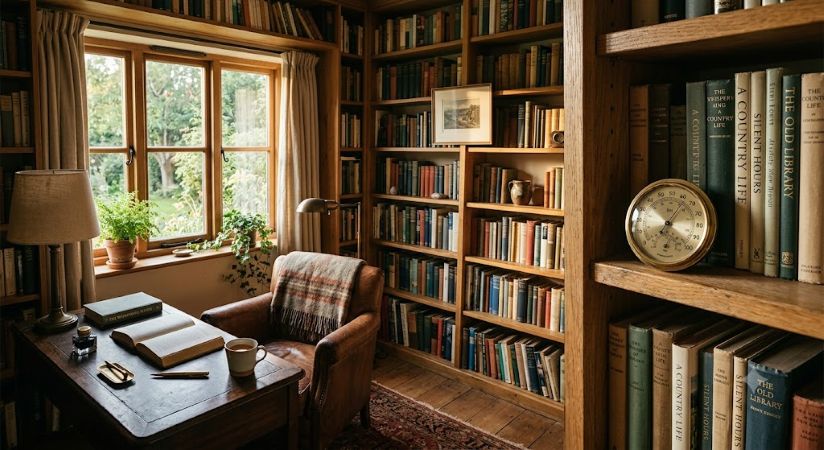
Where the Water Usually Comes From
Few people think about their pipes until something goes wrong, but homes built more than a few decades ago carry plumbing that was never designed to last forever. Data from Lee Company shows that galvanized steel, common in homes built before 1960, corrodes internally over time, narrowing pipe walls and eventually allowing rust and moisture to seep through joints. Reports from Benjamin Franklin Plumbing add that pipe bellies, sagging sections that form as a house settles, can trap water and create slow, hidden leaks rather than dramatic bursts.
This distinction matters for anyone storing books or manuscripts near an exterior wall, a bathroom, or a kitchen plumbing chase. A burst pipe is obvious. A slow drip behind a wall or under a shelf is not, and it can raise local humidity for weeks before anyone notices a musty smell or a warped baseboard. Experts note that shelving placed against shared plumbing walls, in basements, or near older cast iron and galvanized supply lines deserves periodic inspection, even if nothing looks wrong on the surface.
Humidity Control Basics for Storage Rooms
Even without a leak, Georgia’s climate works against paper. Findings from the National Oceanic and Atmospheric Administration place the state firmly in a humid subtropical zone, with long, hot summers and relative humidity that regularly climbs above 70 percent during peak morning hours. That level of ambient moisture is close to the threshold at which mold spores already present on paper can begin to germinate.
Research from the Conservation Center for Art and Historic Artifacts indicates that paper-based materials face the greatest risk of active mold growth once relative humidity reaches or exceeds 70 percent and stays there for several consecutive days. For that reason, archives and research libraries generally maintain storage areas between 45 and 55 percent relative humidity and between 60 and 68 degrees Fahrenheit, a range that slows both mold growth and the natural acid degradation of paper over time.
For a home library, that guidance translates into a few practical habits. It also helps to keep the storage area a well-lit space to catch problems early, since dim corners and shadowed shelves make it easy to miss early warping, staining, or surface mold until it has already spread:
- Keep a small hygrometer in the storage room and check it regularly, especially during summer months.
- Run a dehumidifier in basements, attics, or closets used for long-term storage, rather than relying on general home air conditioning alone.
- Avoid storing valuable books or documents directly against exterior walls or on the floor, where humidity and cold surfaces tend to concentrate.
- Use archival boxes instead of cardboard, since untreated cardboard absorbs and holds moisture, creating a humid microclimate around whatever is stored inside.
When the Problem Outgrows a Homeowner’s Own Efforts
Interleaving damp pages with blotting paper, standing a book upright to air dry, or running a portable fan can work for a single volume that got splashed. It is not a solution for a room where flooring, drywall, or wall cavities have absorbed water from a plumbing failure. Studies published by the American Institute for Conservation recommend freezing water-damaged books that cannot be treated within 48 hours, since freezing halts mold growth without causing the same page distortion that slow air drying can produce.
Once the damage extends past the materials themselves and into the structure around them, drying out a room properly requires equipment most households do not own: commercial dehumidifiers, moisture meters that can read inside wall cavities, and documentation suitable for an insurance claim. At that point, calling in professional water mitigation and structural drying services protects both the collection and the building it sits in. Acting within that first day or two, before hidden moisture has time to spread, remains the single factor that most reliably determines whether a family library survives Georgia’s wet season intact.